The University of Alicante’s Pattern Recognition and Artificial Intelligence Group has contributed to the project by developing technologies for the automatic digitizationof European musical manuscripts. Our work has focus on Optical Music Recognition tools that are able to process both medieval chants and classical scores, turning complex historical documents into structured digital formats.
A key achievement in this project lies in the integration of the of new methods that allowed the alignment between lyrics and musical notation. This is especially important for vocal music (which is represented on the target music scores of the project), where meaning depends on the precise correspondence of text and melody. By addressing this challenge, the tools ensure faithful digital representations that capture not only the symbols but also their functional relationships.
To achieve this, large annotated datasets were created and deep learning pipelines designed to handle irregular handwriting, degraded sources, and diverse notation styles. Given the scale of the task (millions of pages encompassing tens of thousands of works) automation is required. These contributions provide the project with robust resources for cataloging, research, and performance, enabling the preservation of our cultural heritage.
Development of tailored OMR models
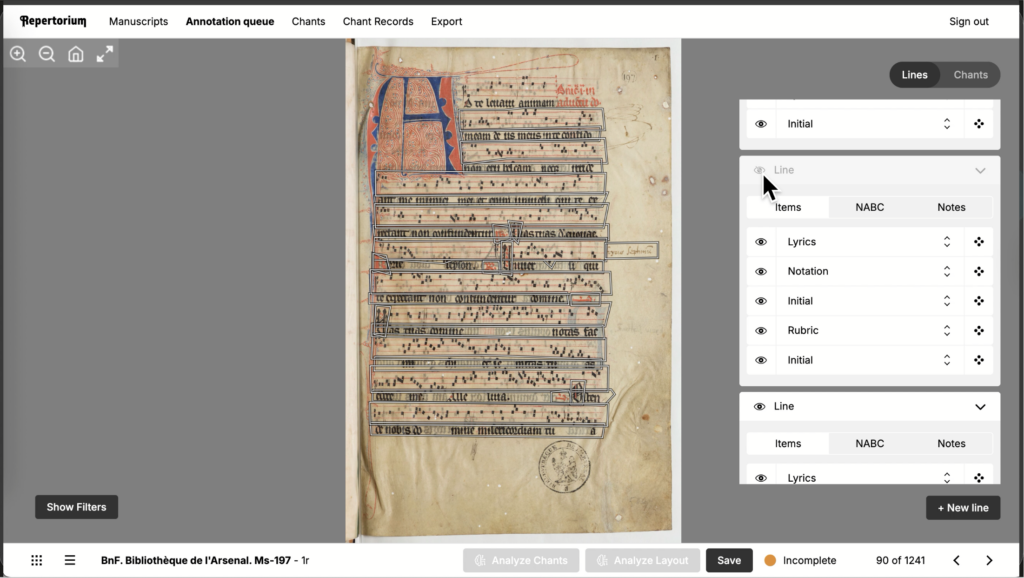
Implementation of document analysis pipelines using state-of-the-art object detection models for the detection of staves and lyrics.
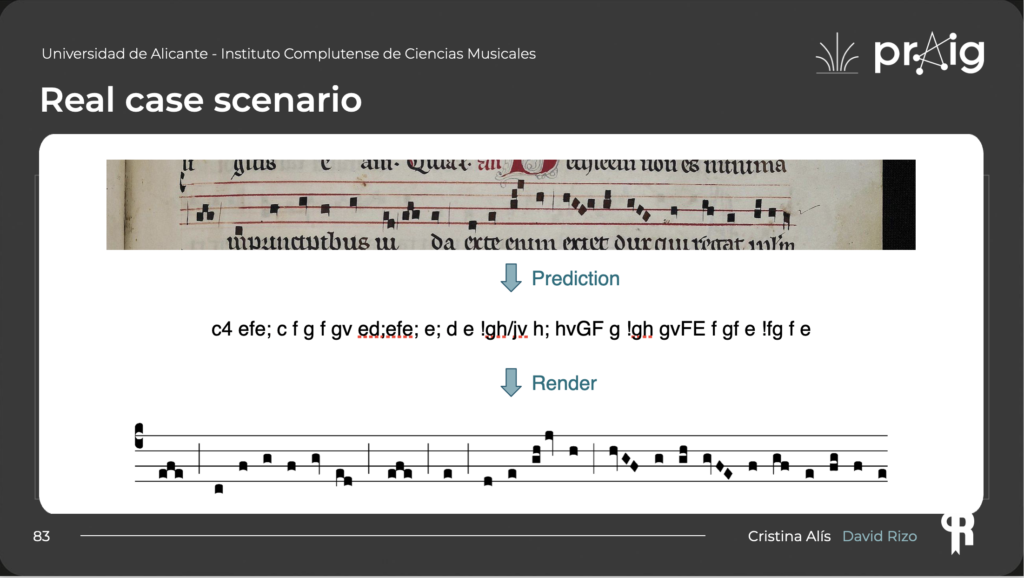
Application of CRNN-CTC architectures for automatic transcription to both music and lyrics in each specific notation type.
Introduction of Aligned Music Notation and Lyrics Transcription (AMNLT) methods for joint recognition and alignment of chant notation and lyrics.
Standardization of automatic transcriptions
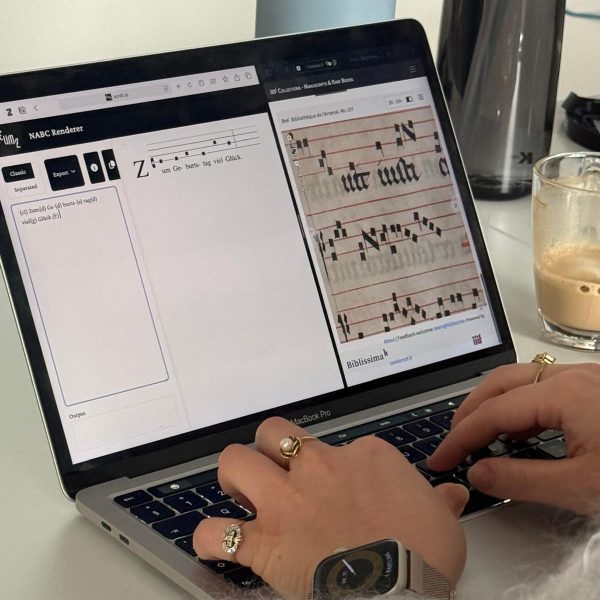
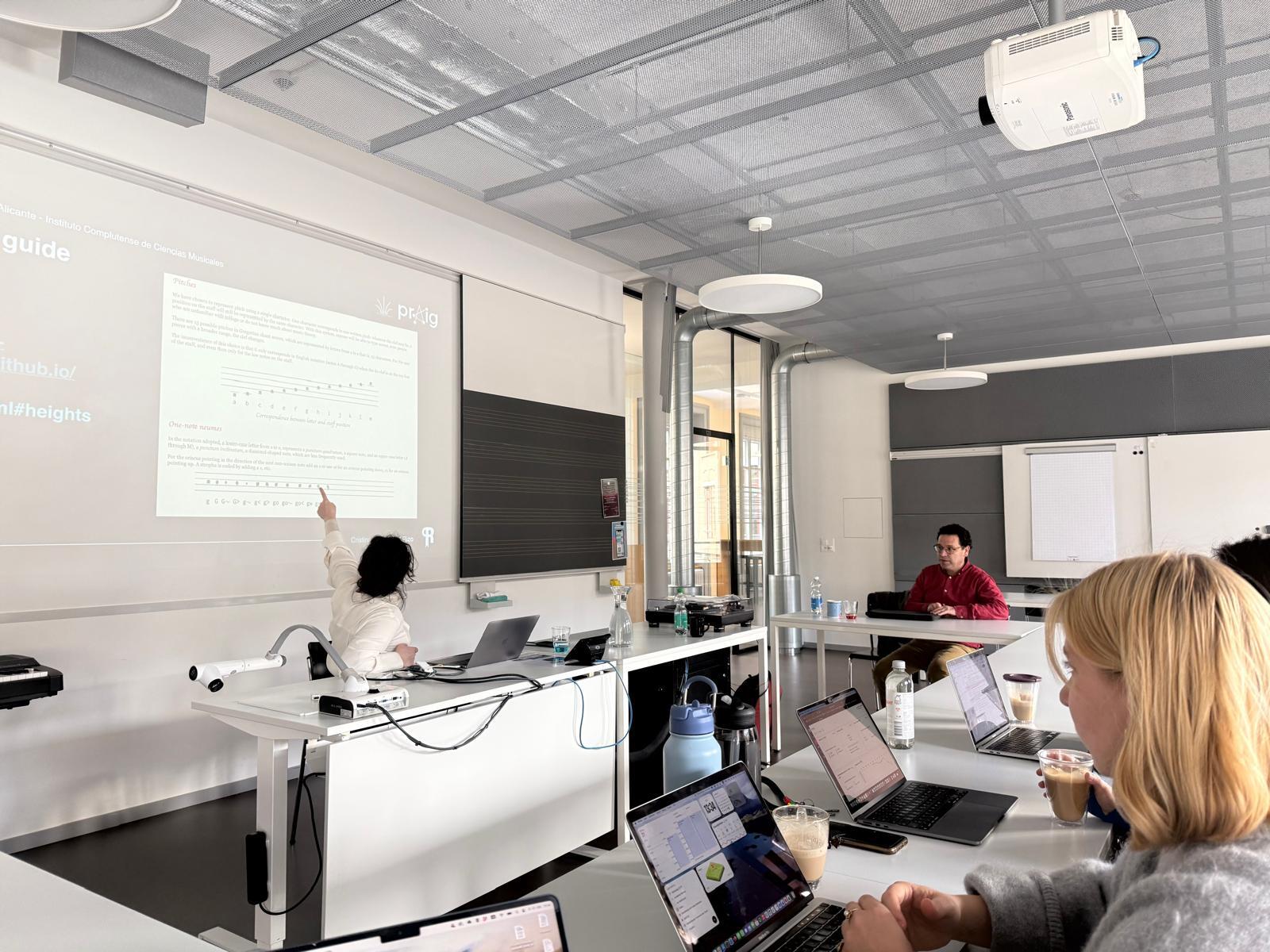
Gregorian manuscripts transcribed into GABC, and NABC formats to encompass specific nuances of the music’s timeframe.
Classical manuscripts converted into MEI and MusicXML, ensuring compatibility with modern musicological tools and performance software.
Musicological Research
this contribution allows scholars to conduct large-scale comparative studies of musical style, notation practices, and textual traditions.
CulturDirectal Heritage Preservation
the tools ensure long-term conservation and accessibility of materials currently held only in physical form.